Why Your Electrolyte Powder Isn't Working: The Sodium Story
You bought an electrolyte powder. You mix it into your water bottle. You drink it diligently. And yet you still feel drained after a hard workout, a long flight, or a hot day outside. The likely culprit? Your powder doesn't have enough sodium.
Sodium is the electrolyte your body loses most during sweat -- roughly 800 to 1,500 mg per liter of sweat, depending on your genetics, fitness level, and the heat. Yet many popular electrolyte powders deliver only 270 to 500 mg per serving. That math doesn't work. You're replacing a fraction of what you lost, and wondering why you still feel like garbage.
What Sodium Actually Does
Sodium isn't just salt on your dinner plate. In your body, it plays three critical roles in hydration:
1. It creates the osmotic gradient that moves water into your cells. Your small intestine absorbs water through a process called solvent drag, which depends on sodium concentration. When sodium moves across the intestinal wall, water follows. Without enough sodium in your drink, the water you're gulping sits in your gut instead of reaching your bloodstream and muscles.
2. It maintains blood volume. When you sweat, you lose sodium from your blood plasma. As plasma sodium drops, your blood volume contracts, your heart has to work harder to circulate the same amount of oxygen, and your performance tanks. This is why severe dehydration feels like exhaustion -- your cardiovascular system is running on low fluid.
3. It triggers the thirst mechanism. Your brain monitors plasma sodium levels. When they drop below a threshold, your body actually suppresses thirst to avoid diluting sodium further. This is why people who drink plain water during long exercise sometimes feel less thirsty but more fatigued -- they're diluting what little sodium they have left.
The Sodium-Glucose Transport System
Researchers discovered in the 1960s that sodium and glucose, when present together in the gut, activate a co-transporter protein (SGLT1) that dramatically speeds water absorption. This finding led to oral rehydration therapy (ORT), which the World Health Organization calls "potentially the most important medical advance of the 20th century" for preventing dehydration deaths.
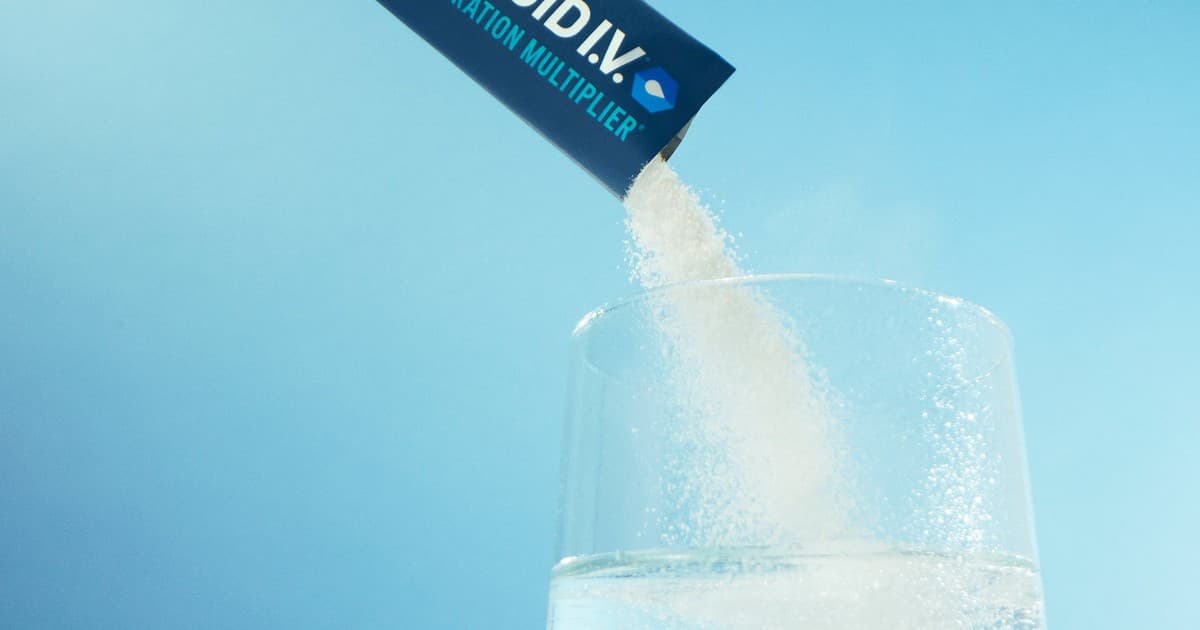
The practical takeaway: electrolyte powders that contain both sodium and some glucose can move water into your bloodstream faster than either sodium or glucose alone. That's why products like Pedialyte (1,080 mg sodium, 13 g sugar) and Liquid IV (500 mg sodium, 11 g sugar) include sugar on purpose. The glucose isn't just for taste -- it's activating a specific absorption pathway.
But here's the nuance: you don't need much glucose to activate SGLT1. Research suggests the co-transporter saturates at relatively low glucose concentrations. Powders with 15 or 17 grams of sugar aren't necessarily absorbing faster than ones with 11 grams -- they're just adding more calories.
And for zero-sugar formulas like LMNT (1,000 mg sodium, 0 g sugar) and Drip Drop (660 mg sodium, 0 g sugar), the sodium itself still drives absorption through passive osmotic gradients. The rate may be slightly slower without glucose co-transport, but the total sodium delivered is significantly higher. For someone who just lost 2,000 mg of sodium in a two-hour training session, getting 1,000 mg back per serving matters more than shaving a few minutes off absorption time.
How Much Sodium Are You Actually Getting?
Here's where the numbers get uncomfortable. Let's rank seven popular electrolyte powders by sodium content:
| Brand | Sodium per Serving (mg) | Sugar (g) | Price/Serving |
|---|---|---|---|
| Pedialyte | 1,080 | 13 | $0.79 |
| LMNT | 1,000 | 0 | $1.12 |
| Drip Drop | 660 | 0 | $1.25 |
| Liquid IV | 500 | 11 | $1.49 |
| Skratch Labs | 370 | 17 | $0.98 |
| Nuun | 300 | 1 | $0.75 |
| Ultima Replenisher | 270 | 0 | $0.53 |
The gap between top and bottom is 810 mg. If you're using Ultima or Nuun as your only electrolyte source after a hard workout in the heat, you're replacing less than a third of what an average person loses per liter of sweat. That's not a knock on those products -- they're designed for light daily hydration, not heavy sweat replacement. But if you're using them in the wrong context, you'll feel the deficit.
The Sweat Rate Problem
An average person sweats about 1 liter per hour during moderate exercise in warm conditions. Trained athletes and people in hot climates can lose 2 to 3 liters per hour. Each liter carries roughly 900 to 1,500 mg of sodium (individual variation is huge -- some people have saltier sweat than others).
Let's do the math for a 90-minute workout where you lose 1.5 liters of sweat:
- Sodium lost: ~1,350 to 2,250 mg (using a midrange sweat sodium concentration)
- LMNT replacement (1 stick): 1,000 mg -- covers 44% to 74% of losses
- Liquid IV replacement (1 stick): 500 mg -- covers 22% to 37% of losses
- Nuun replacement (1 tablet): 300 mg -- covers 13% to 22% of losses
None of these fully replace what you lost in a single serving. But the differences are significant. Two LMNT sticks get you close to full replacement. Two Nuun tablets barely scratch the surface.
This doesn't mean Nuun is bad. It means using Nuun for a heavy-sweat scenario is like bringing a garden hose to a house fire. Right tool, wrong job.
Why Low-Sodium Powders Exist
If sodium is so important, why do most brands keep it low? Three reasons:
Taste. High-sodium drinks taste salty. That's fine for trained athletes who associate the salty taste with recovery, but it's a hard sell for casual consumers who want their water to taste like lemonade. Brands targeting the mainstream wellness market (Liquid IV, Nuun, Ultima) keep sodium moderate and flavor forward.
Fear of salt. Decades of public health messaging linked sodium to high blood pressure. That association is real for sedentary people eating processed food diets. But for active people losing sodium through sweat, the concern flips: under-replacing sodium is the bigger risk. The context matters enormously.
Regulatory caution. Putting 1,000+ mg of sodium on a supplement label makes some companies nervous about consumer perception. Pedialyte gets away with 1,080 mg because it's marketed as a medical product. LMNT leans into the science community. Other brands play it safe.
Matching Sodium to Your Day
Not every day requires 1,000 mg of sodium from a powder. Here's a practical framework:
Desk day, light activity: 270-500 mg of sodium from an electrolyte powder is fine. Ultima ($0.53/serving) or Nuun ($0.75/serving) keeps costs low and adds a light electrolyte boost to your water. Your food probably covers the rest.
Moderate exercise (30-60 minutes): Aim for 500-700 mg of sodium. Liquid IV (500 mg) or Drip Drop (660 mg) hits the range, especially if you're also eating a meal within an hour of training.
Hard training, hot conditions, 90+ minutes: You need 800-1,000+ mg per serving, and possibly two servings. LMNT (1,000 mg) or Pedialyte (1,080 mg) are the right tools. Anything less means you're running a sodium deficit that accumulates across the session.
Illness or rapid fluid loss: Pedialyte's combination of 1,080 mg sodium, 780 mg potassium, and 13 g sugar mirrors the WHO oral rehydration formula. The sugar isn't optional here -- it activates co-transport when your gut is already compromised.
The Takeaway
Your electrolyte powder has one primary job: deliver sodium. Potassium and magnesium matter too, but sodium is the main mineral you lose in sweat, the main driver of intestinal water absorption, and the main regulator of blood volume.
If you've been mixing a low-sodium powder into your bottle and wondering why you still feel flat after training, the answer is probably staring at you from the nutrition label. Check the milligrams. Do the math against your sweat losses. And pick the powder that matches the intensity of your day -- not the one with the best flavor or the prettiest packaging.
The brands that deliver serious sodium -- LMNT at 1,000 mg and Pedialyte at 1,080 mg -- exist because some situations demand aggressive replacement. The brands that keep sodium moderate -- Liquid IV, Nuun, Ultima -- exist because not every sip needs to be a recovery weapon. Know which scenario you're in, and the right choice becomes obvious.
How we do this
See methodology and our data sources policy.

About Salty Hydration
Data-driven electrolyte reviews for athletes and health enthusiasts. Every number cited comes from verified label data and published pricing pages.